Present Continuous And Present Simple Exercises
Ciao a tutti! State lottando con il present simple e il present continuous in inglese? Non siete i soli! Molti studenti trovano difficile distinguere tra questi due tempi verbali. Questo articolo è stato creato appositamente per aiutarvi a superare questa sfida attraverso esercizi pratici e spiegazioni chiare. Che siate principianti o abbiate già una base di inglese, troverete qui risorse utili per migliorare la vostra comprensione e il vostro utilizzo di questi tempi verbali fondamentali.
Present Simple: Ripasso e Esercizi
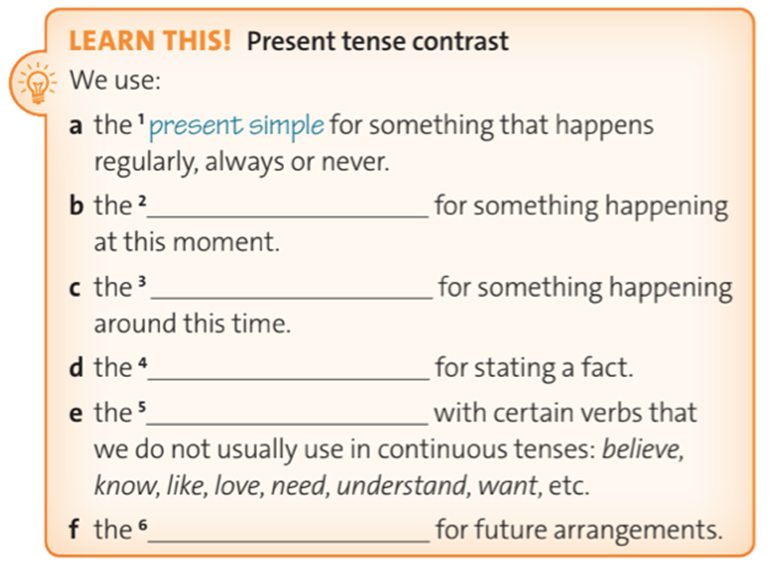
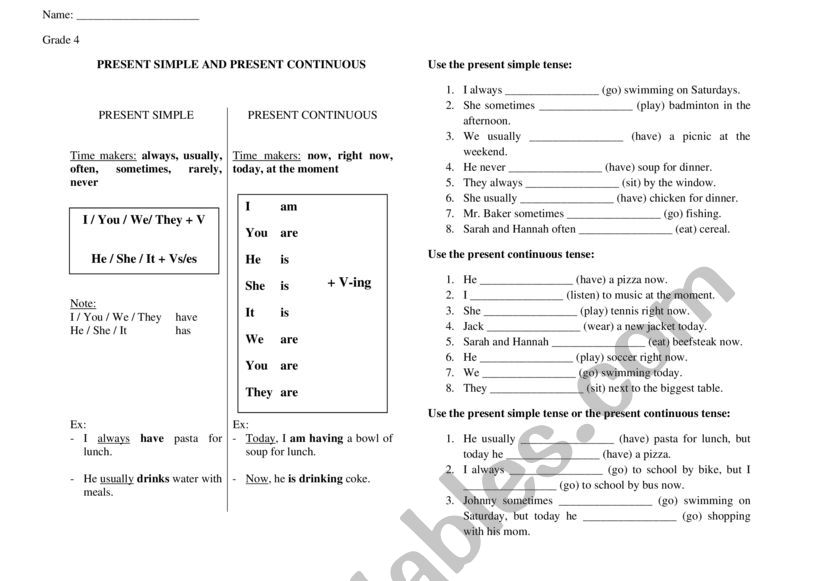
Il present simple viene utilizzato per esprimere:
- Abitudini e routine: "I usually drink coffee in the morning." (Di solito bevo caffè la mattina.)
- Fatti generali e verità universali: "The sun rises in the east." (Il sole sorge a est.)
- Programmi e orari fissi: "The train leaves at 9:00 AM." (Il treno parte alle 9:00 del mattino.)
- Stati e sentimenti permanenti: "I live in Rome." (Vivo a Roma.)
Struttura del present simple:
Must Read
- Affermativa: Soggetto + Verbo (forma base) (aggiungere -s/-es alla terza persona singolare)
- Negativa: Soggetto + Do/Does + Not + Verbo (forma base)
- Interrogativa: Do/Does + Soggetto + Verbo (forma base)?
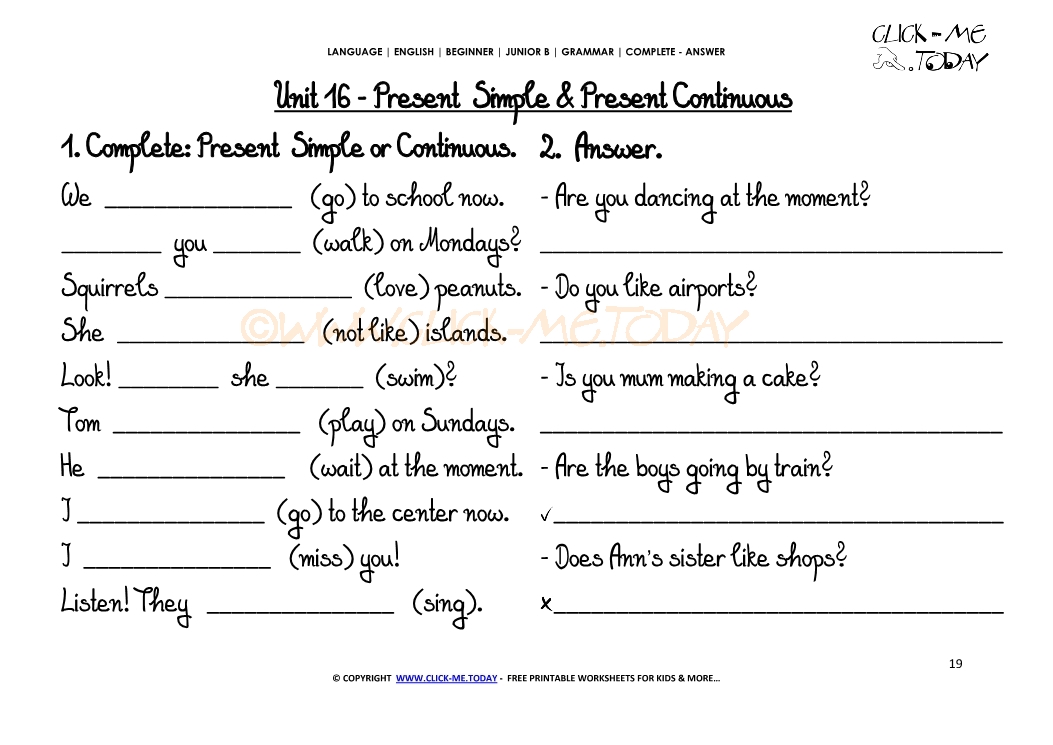
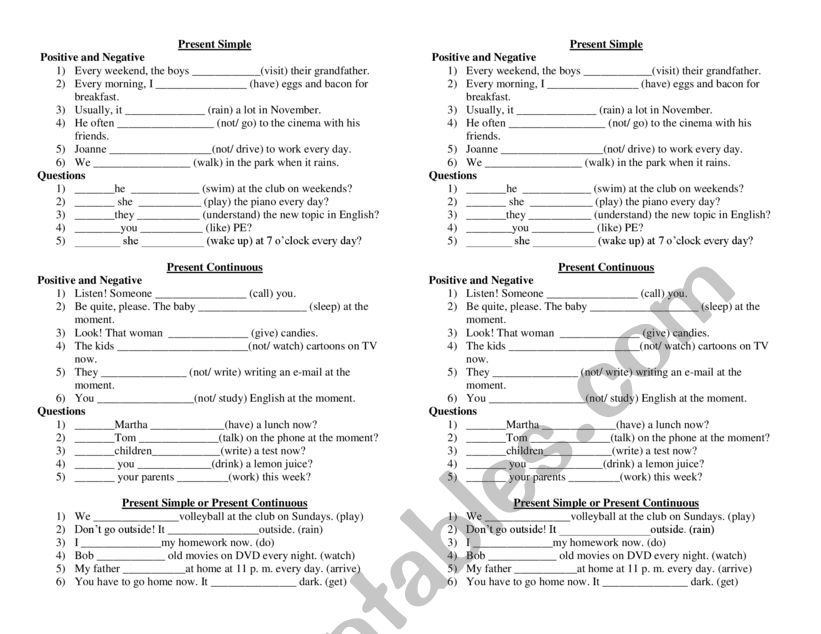
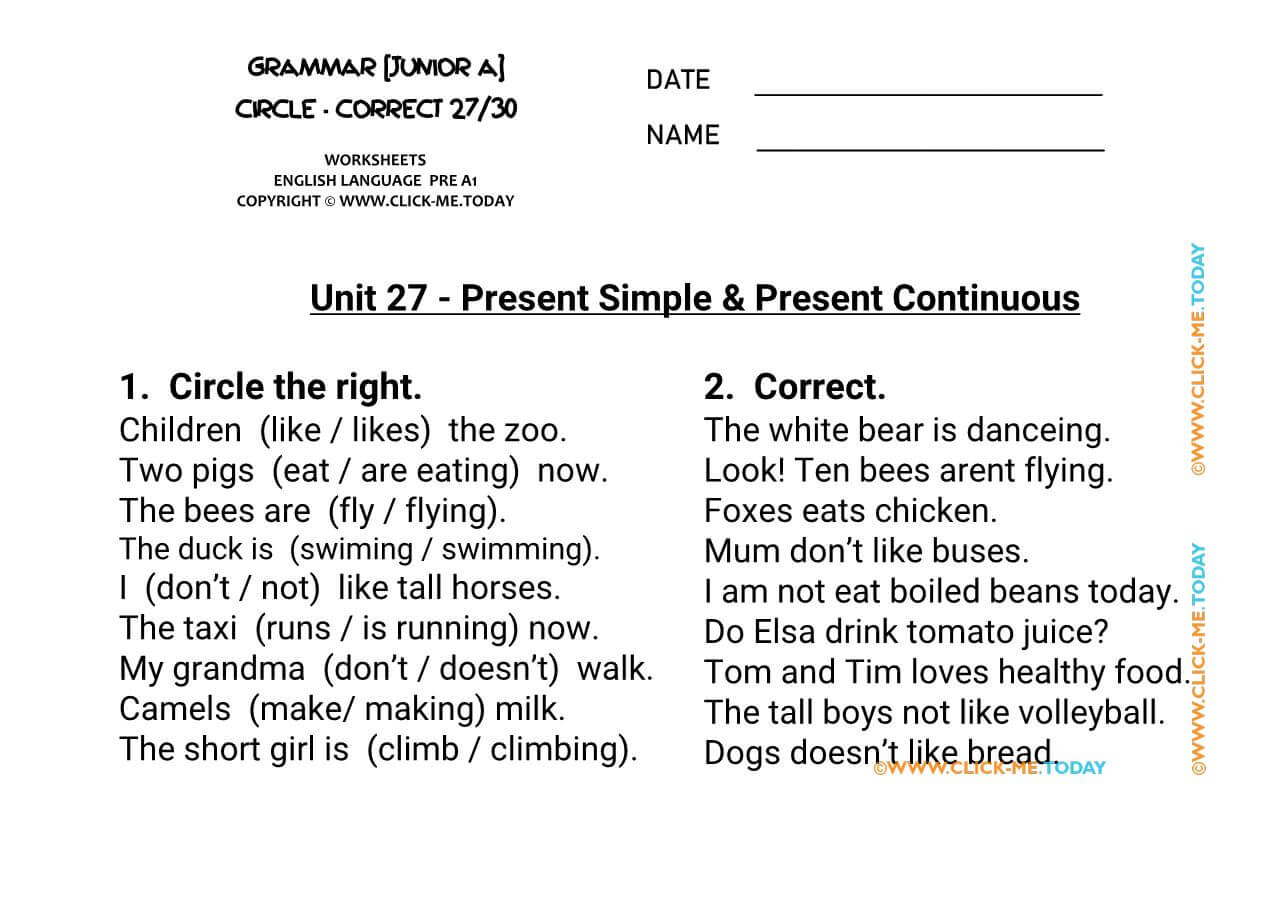
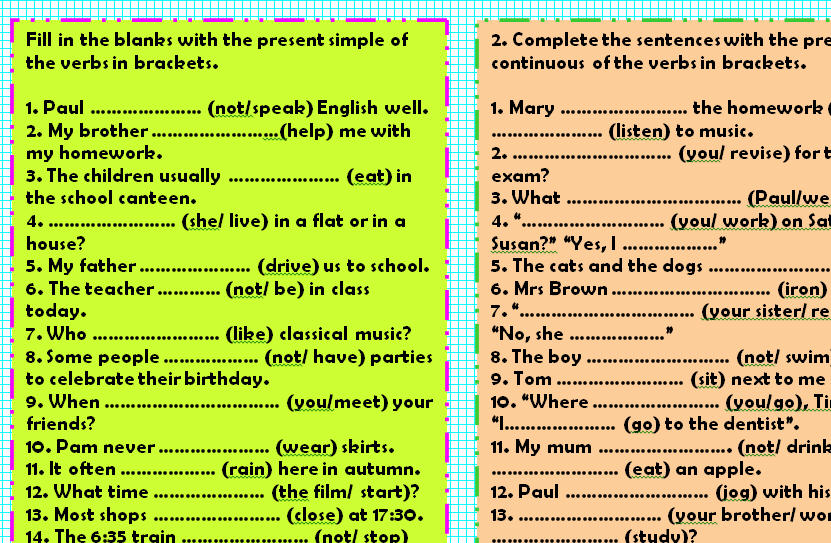
Esercizio 1: Completa le frasi con il present simple.
Riempi gli spazi vuoti con la forma corretta del verbo tra parentesi al present simple:
- I ________ (work) as a teacher.
- She ________ (play) the piano every day.
- They ________ (not/like) spicy food.
- ________ you (speak) English?
- He ________ (go) to the gym twice a week.
Risposte:
- work
- plays
- do not like / don't like
- Do
- goes
Esercizio 2: Trasforma le seguenti frasi in forma negativa e interrogativa.
- She eats breakfast at 7:00 AM.
- They live in London.
- He plays football on Sundays.
Risposte:
- Negative: She does not eat breakfast at 7:00 AM. Interrogative: Does she eat breakfast at 7:00 AM?
- Negative: They do not live in London. Interrogative: Do they live in London?
- Negative: He does not play football on Sundays. Interrogative: Does he play football on Sundays?
Present Continuous: Ripasso e Esercizi
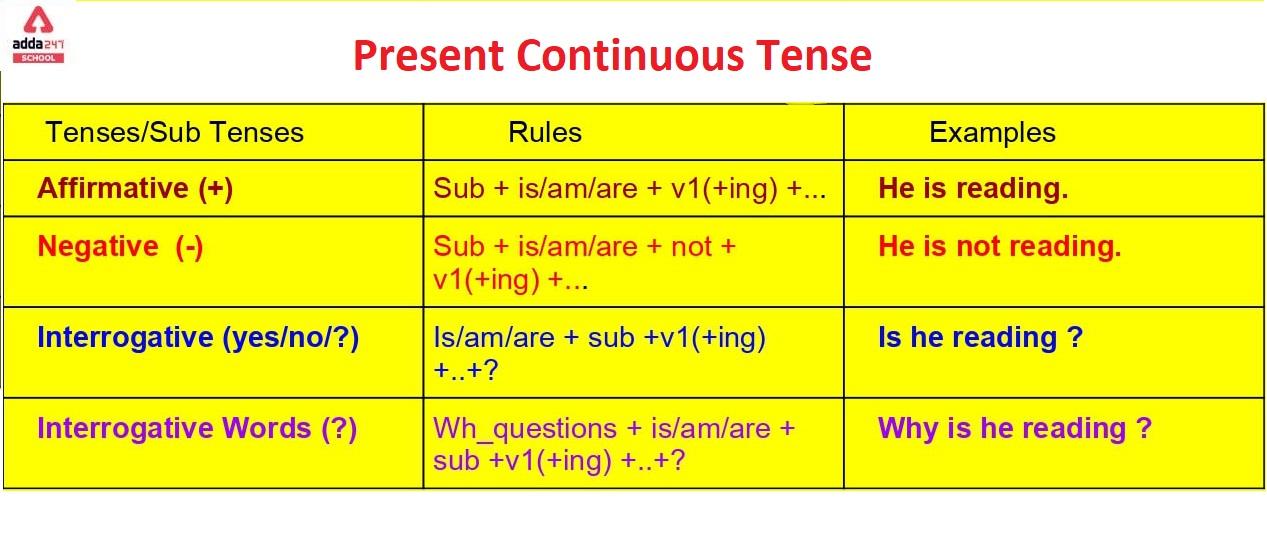
Il present continuous (chiamato anche present progressive) viene utilizzato per esprimere:
- Azioni che si svolgono nel momento in cui si parla: "I am watching TV right now." (Sto guardando la TV adesso.)
- Azioni temporanee: "I am staying at a hotel for a few days." (Alloggio in un hotel per alcuni giorni.)
- Piani futuri definiti: "We are going to the cinema tonight." (Andiamo al cinema stasera.)
- Azioni che si ripetono con frequenza, spesso causando fastidio: "He is always complaining!" (Si lamenta sempre!)
Struttura del present continuous:
- Affermativa: Soggetto + Am/Is/Are + Verbo-ing
- Negativa: Soggetto + Am/Is/Are + Not + Verbo-ing
- Interrogativa: Am/Is/Are + Soggetto + Verbo-ing?
Esercizio 3: Completa le frasi con il present continuous.
Riempi gli spazi vuoti con la forma corretta del verbo tra parentesi al present continuous:
- I ________ (study) English at the moment.
- She ________ (cook) dinner now.
- They ________ (not/watch) TV.
- ________ you (listen) to music?
- He ________ (work) on a new project.
Risposte:
- am studying
- is cooking
- are not watching / aren't watching
- Are
- is working
Esercizio 4: Trasforma le seguenti frasi in forma negativa e interrogativa.
- He is playing video games.
- They are traveling to Italy.
- She is reading a book.
Risposte:
- Negative: He is not playing video games. Interrogative: Is he playing video games?
- Negative: They are not traveling to Italy. Interrogative: Are they traveling to Italy?
- Negative: She is not reading a book. Interrogative: Is she reading a book?
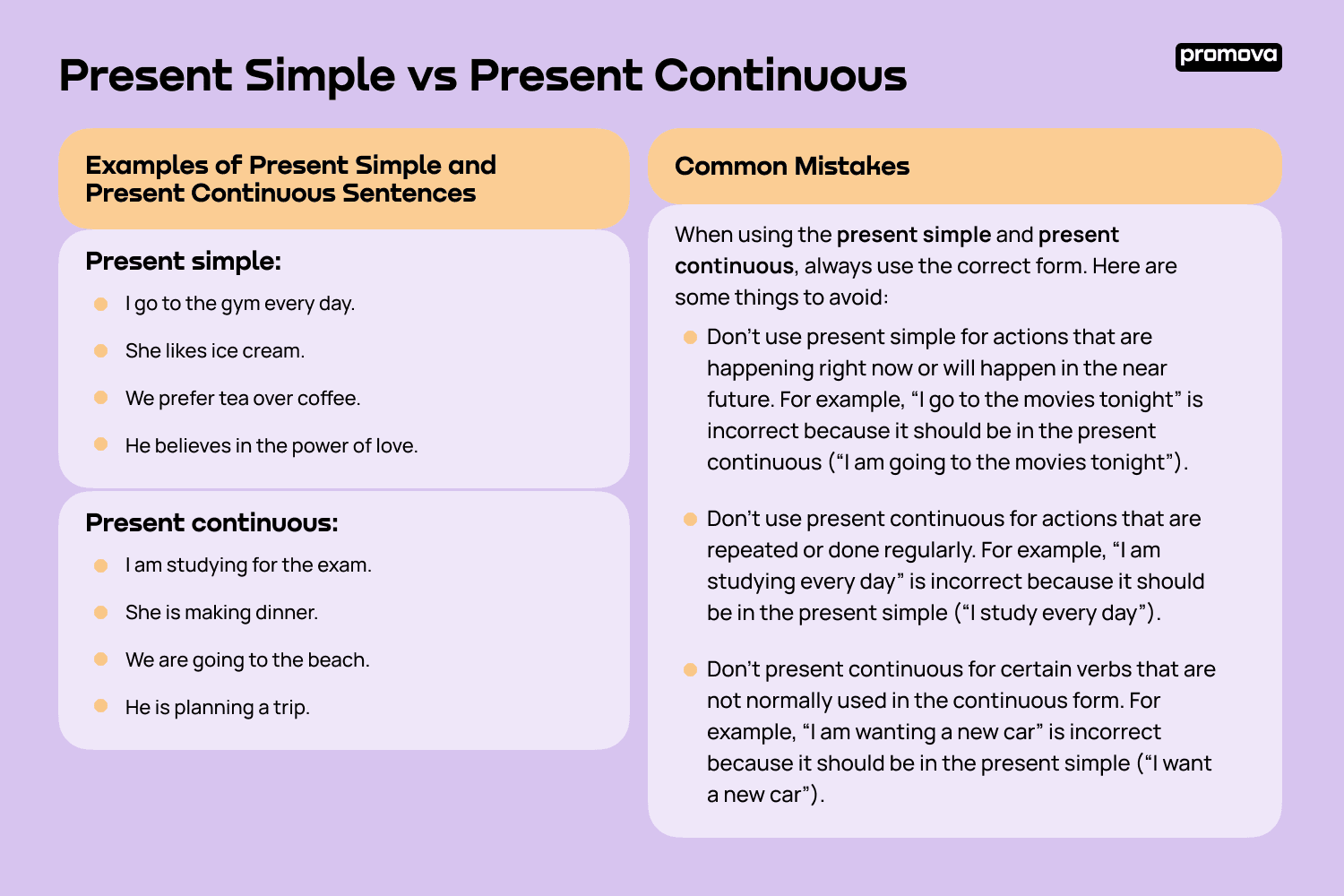
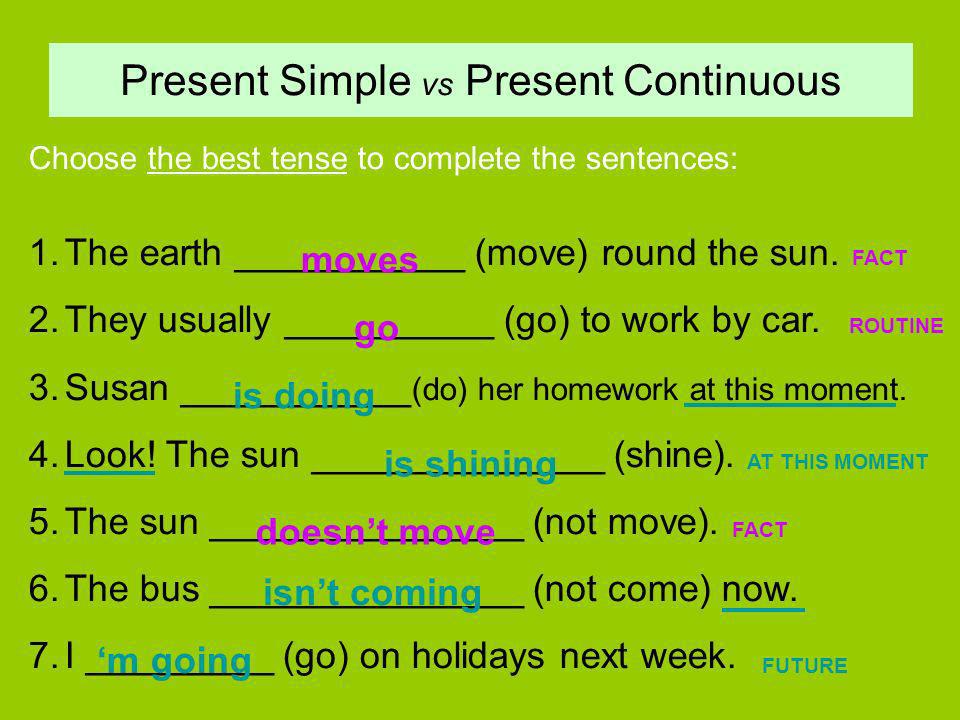
Present Simple vs Present Continuous: Il Confronto
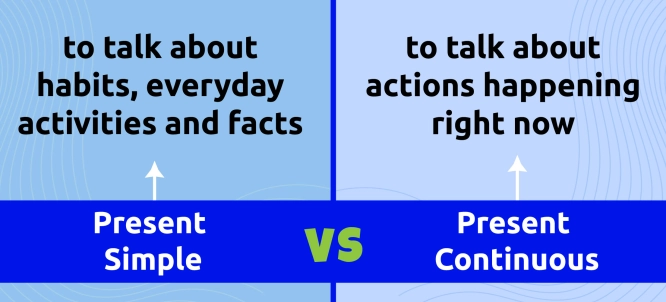
La chiave per distinguere tra i due tempi verbali è capire se l'azione è un'abitudine/fatto generale (present simple) o un'azione in corso (present continuous).
Esempi:
- Present Simple: "I work in an office." (Lavoro in un ufficio - questo è il mio lavoro abituale.)
- Present Continuous: "I am working from home today." (Oggi lavoro da casa - è una situazione temporanea.)
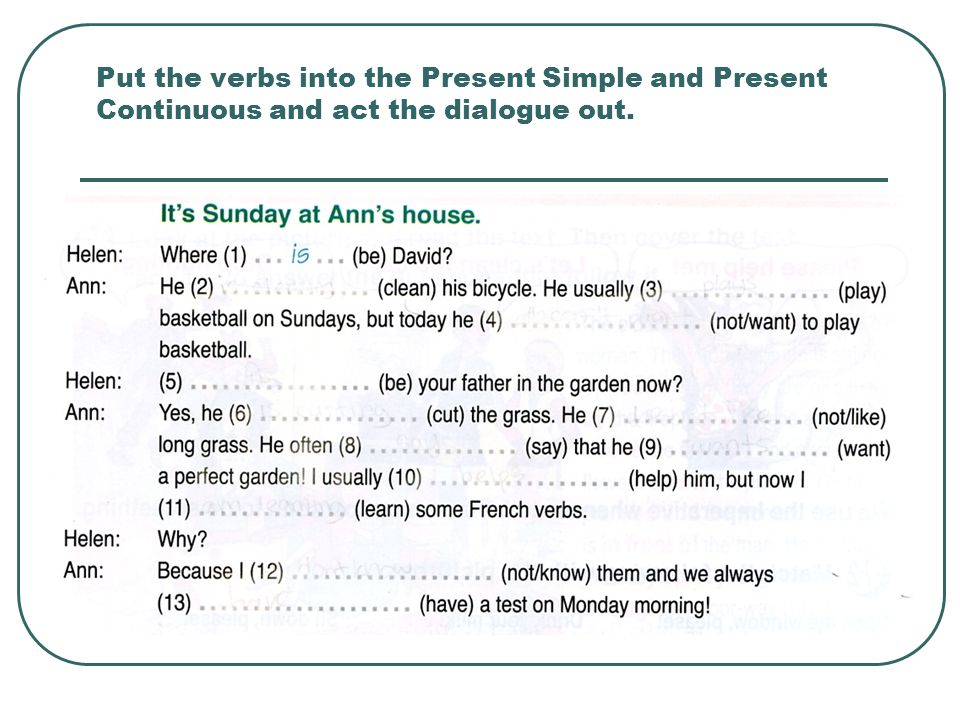
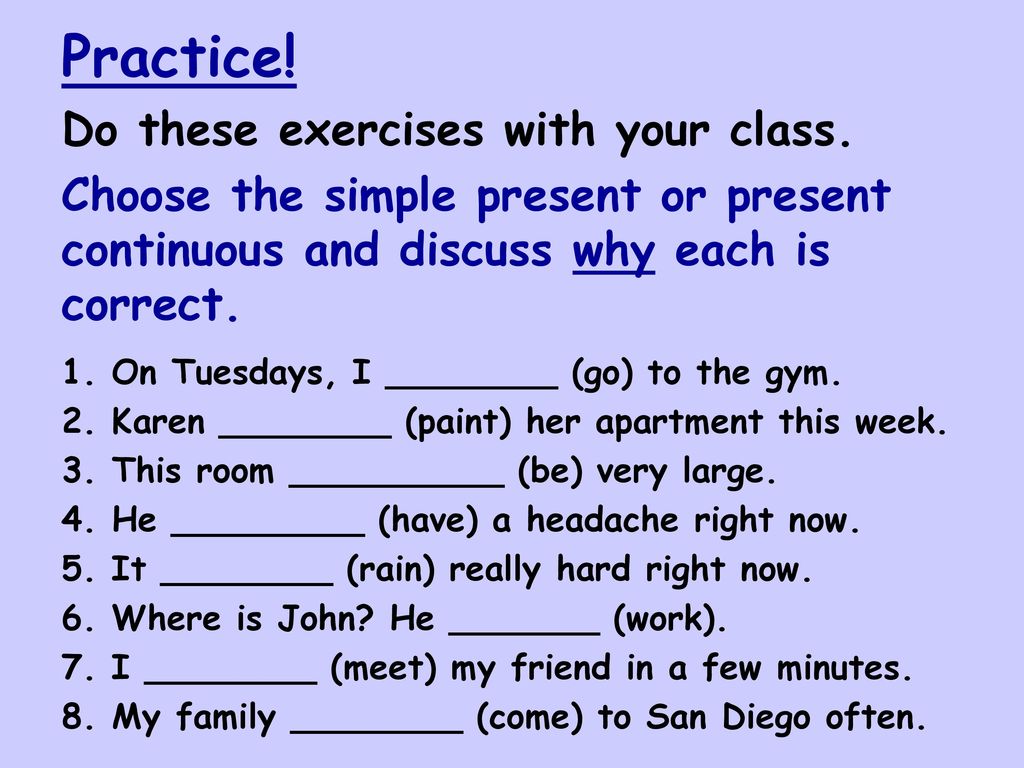
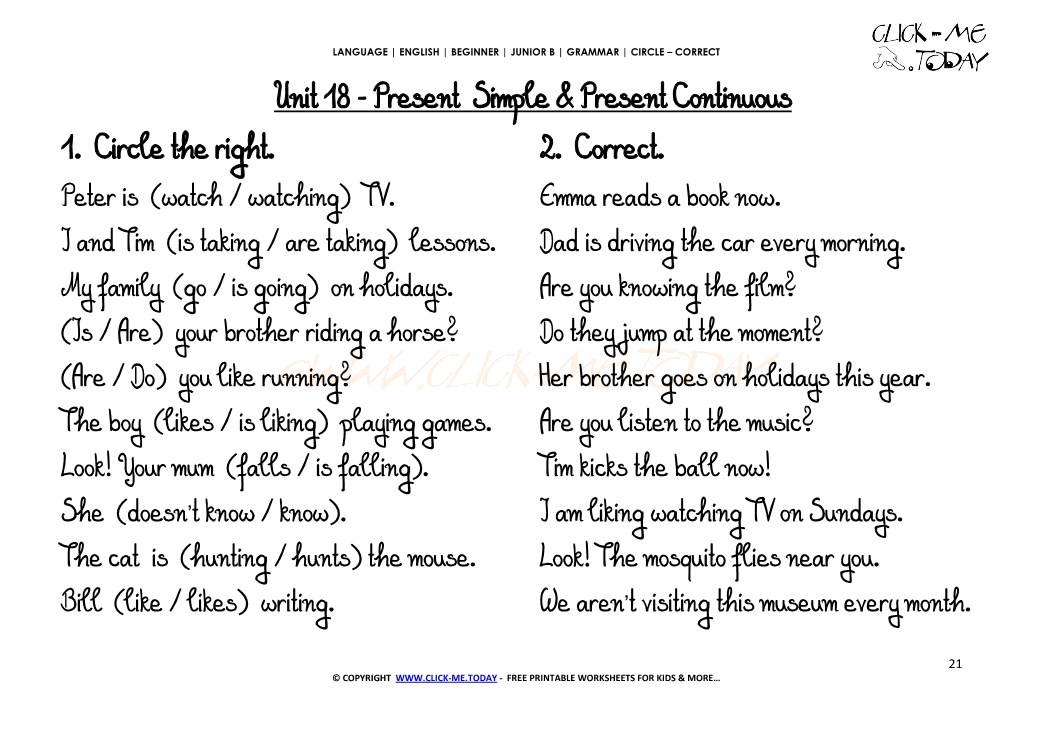
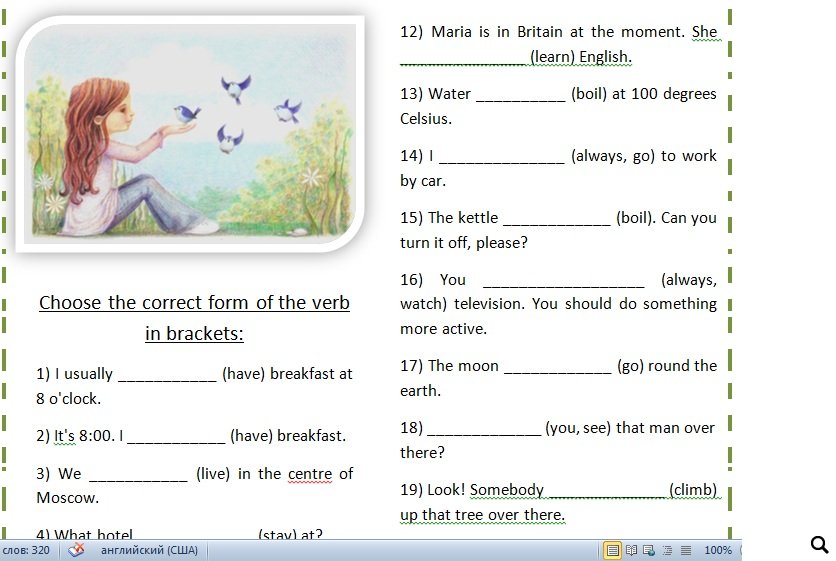
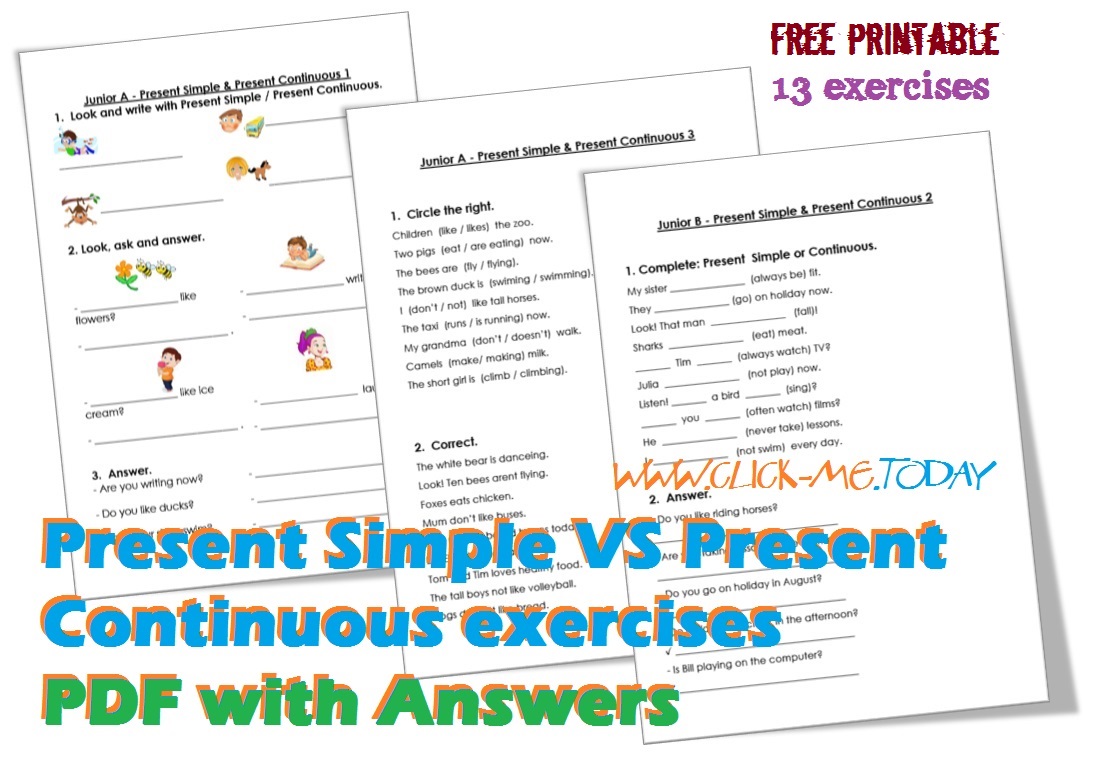
Esercizio 5: Scegli il tempo verbale corretto (present simple o present continuous).
Seleziona il tempo verbale più appropriato per completare le seguenti frasi:
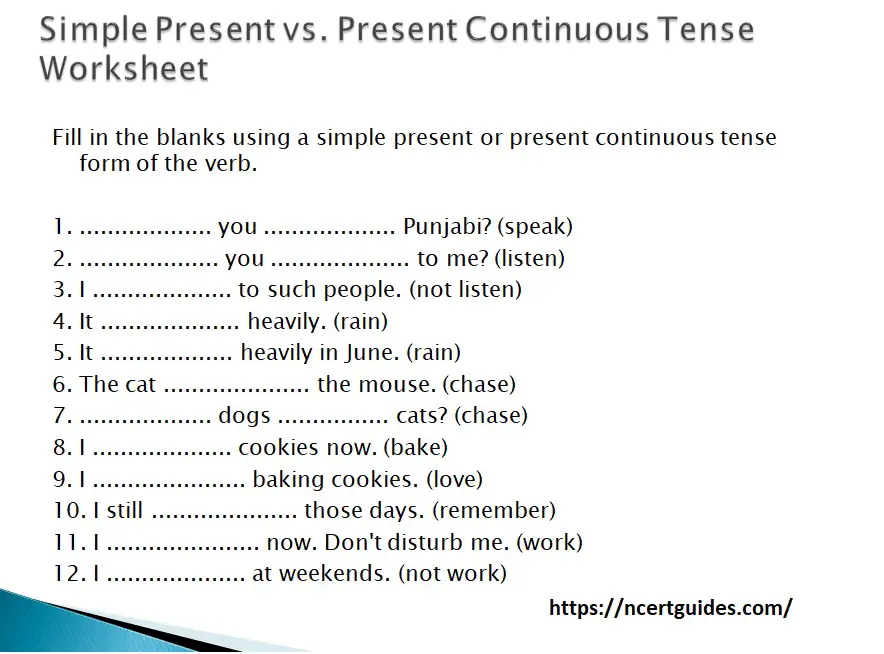
- She ________ (usually/drink) tea in the morning, but today she ________ (drink) coffee.
- They ________ (live) in Paris, but they ________ (stay) in Rome for a week.
- He ________ (play) football every Sunday, but today he ________ (watch) a movie.
- I ________ (study) English every day, but right now I ________ (eat) lunch.
- The sun ________ (rise) in the east. It ________ (not/shine) right now because it's night.
Risposte:
- usually drinks, is drinking
- live, are staying
- plays, is watching
- study, am eating
- rises, is not shining / isn't shining
Parole Chiave (Signal Words)
Alcune parole possono aiutarvi a identificare quale tempo verbale utilizzare:
- Present Simple: usually, always, often, sometimes, rarely, never, every day/week/month/year, on Mondays, in general.
- Present Continuous: now, right now, at the moment, today, this week, these days.
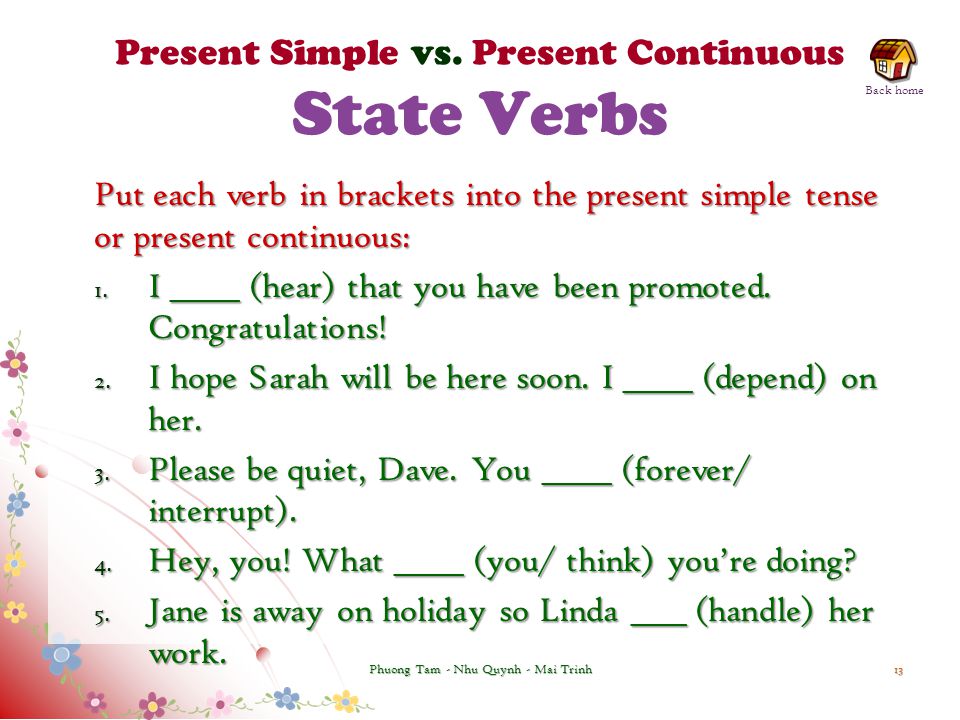
Attenzione! Alcuni verbi (detti stative verbs) esprimono stati o sentimenti e di solito non vengono utilizzati al present continuous. Esempi: to be, to have, to know, to believe, to like, to love, to hate, to understand.
Esempio:
- Corretto: "I know the answer." (So la risposta.)
- Errato: "I am knowing the answer."
Esercizi Aggiuntivi per la Pratica
Per consolidare ulteriormente la vostra comprensione, provate a creare le vostre frasi utilizzando il present simple e il present continuous. Pensate alle vostre attività quotidiane, ai vostri hobby e ai vostri piani futuri. Più praticate, più facile diventerà distinguere tra i due tempi verbali.
Esempio:
"I wake up at 7:00 AM every day (present simple). This morning, I am waking up late because it's Saturday (present continuous)."
Conclusione
Speriamo che questo articolo vi abbia fornito gli strumenti e la pratica necessari per padroneggiare il present simple e il present continuous. Ricordate, la chiave è la pratica costante e la comprensione delle differenze fondamentali tra i due tempi verbali. Non abbiate paura di fare errori, perché è attraverso gli errori che si impara! Continuate a studiare, esercitarvi e presto vi sentirete a vostro agio nell'utilizzo di questi importanti tempi verbali inglesi. Buon apprendimento!